If visiting Europe feels like a dream that’s always just a little out of reach, you’re not alone. For a lot of people, Europe feels complicated — too many countries, too much planning, not enough time, not enough money.
But here’s the truth: Europe doesn’t need to be complicated to be magical.
You don’t need a perfectly planned itinerary, unlimited vacation days, or a luxury budget. What you do need is a simple starting point and the confidence to take the first step.
This guide breaks down what actually makes a Europe trip work — especially if it’s your first time.
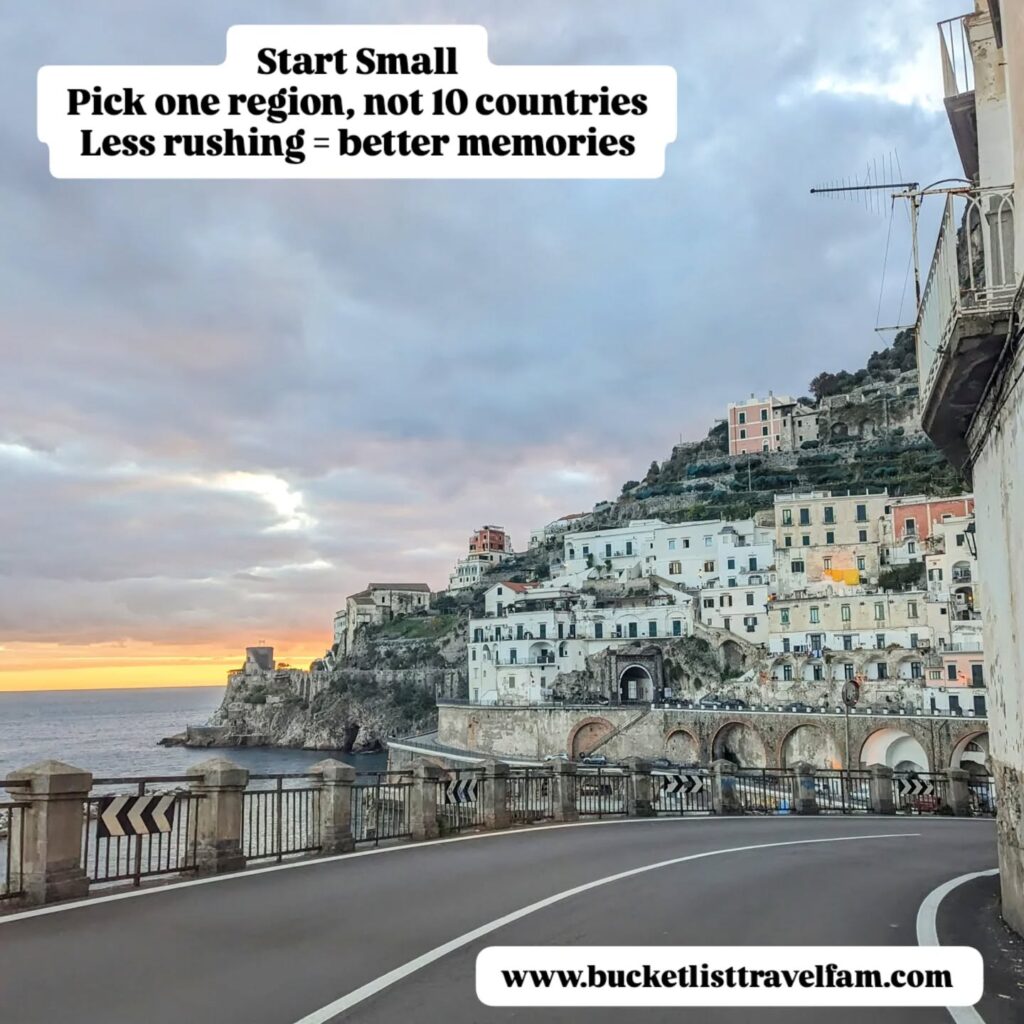
Start Small: Pick One Region, Not Ten Countries
One of the biggest mistakes first-time travelers make is trying to see everything at once.
Europe rewards slow travel. Staying in one region allows you to:
• Reduce travel stress
• Save money
• Actually experience places instead of rushing through them
Instead of hopping across the continent, focus on areas that naturally connect.
Good first-time regions include:
• Northern Italy
• Bavaria & Austria
• France’s Alsace region
• Spain (Barcelona + nearby towns)
• Germany (a few cities connected by train)
You’ll see more by doing less.
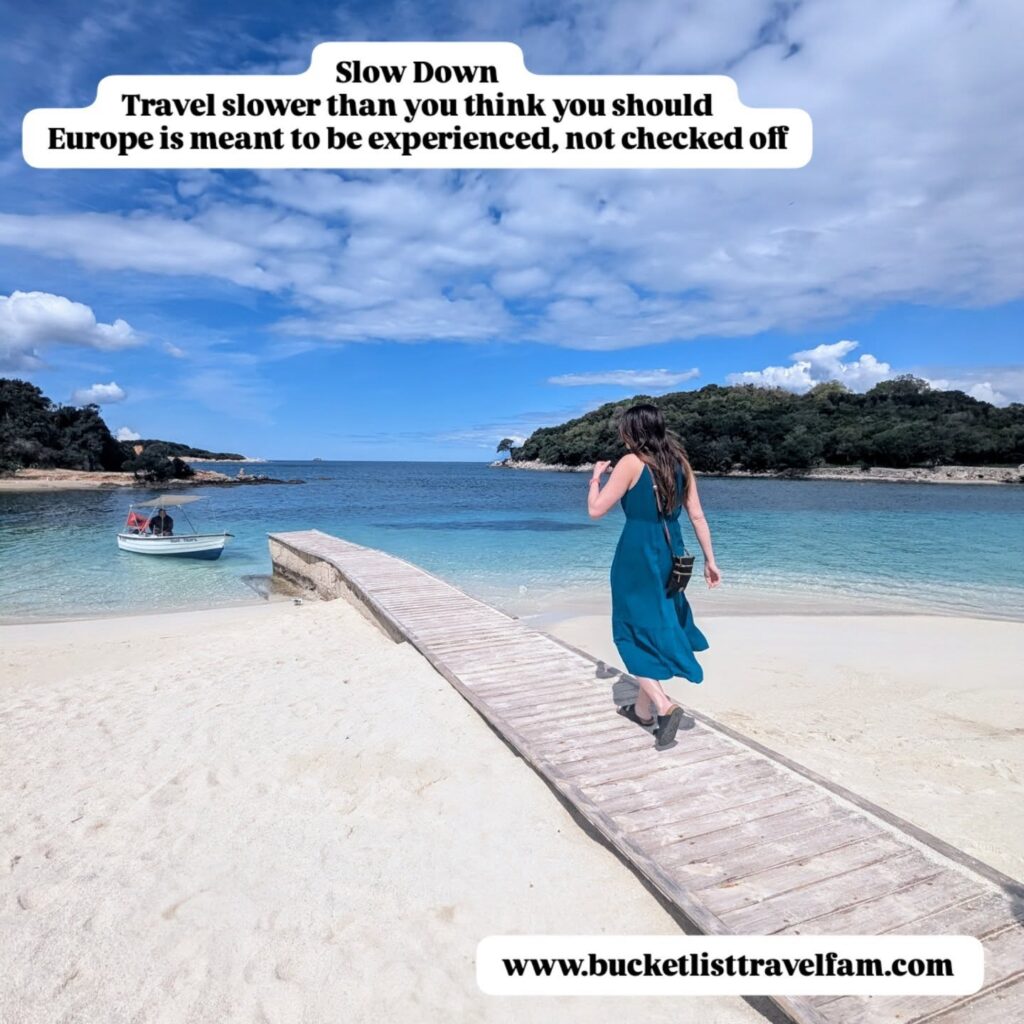
Travel Slower Than You Think You Should
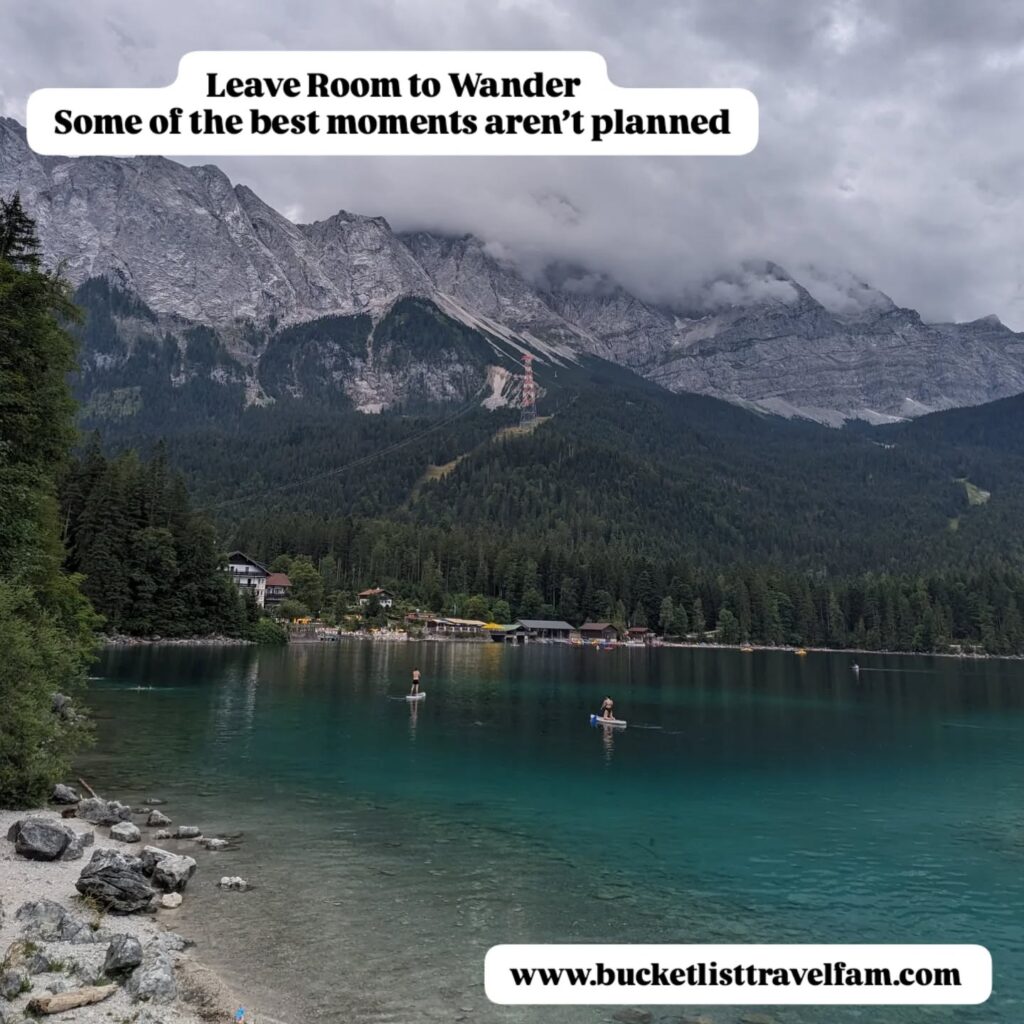
It’s tempting to pack every day full — especially when you’re crossing an ocean to get there. But Europe shines in the in-between moments.
Slow travel looks like:
• One or two activities per day
• Long meals instead of rushed ones
• Wandering neighborhoods without a plan
• Sitting at cafés and people-watching
These moments often become the memories you talk about most.
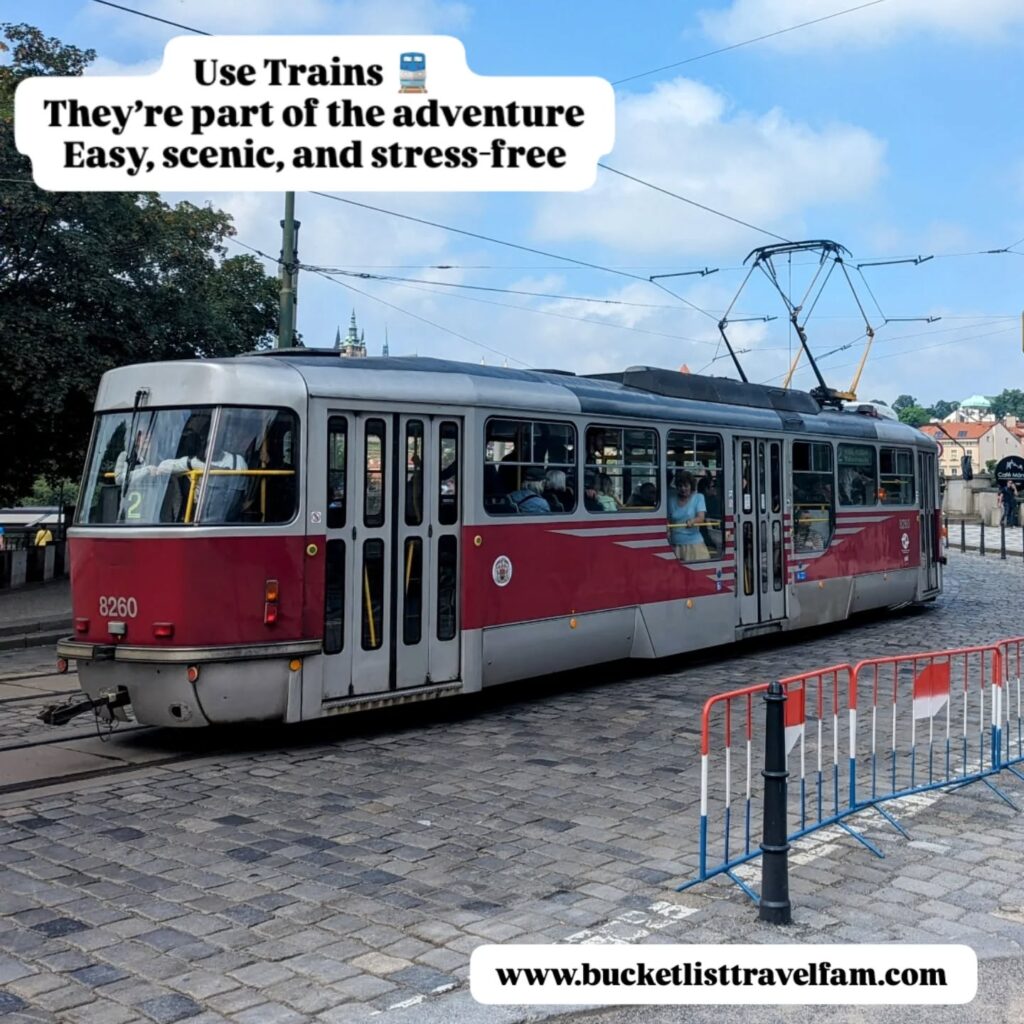
Use Trains (They’re Part of the Experience)
Train travel in Europe isn’t just transportation — it’s part of the trip.
Why trains work so well:
• City-center to city-center travel
• No baggage fees
• Scenic routes
• Less stress than airports
For first-time travelers, trains remove a huge layer of anxiety and add a lot of charm.
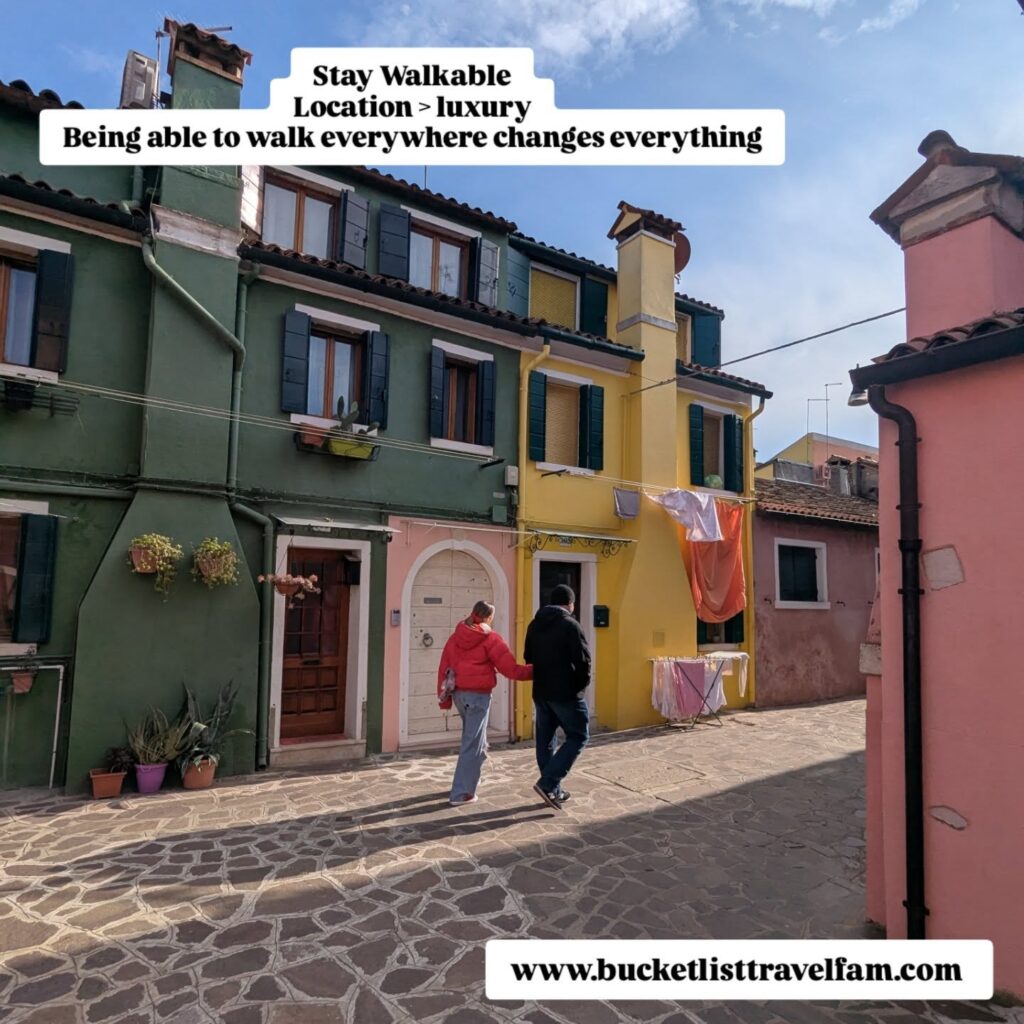
Stay Walkable, Not Fancy
You don’t need luxury hotels to have an incredible trip.
What matters more than amenities:
• Location
• Walkability
• Access to cafés, bakeries, and local streets
Staying in a walkable neighborhood means you can:
• Step outside and explore immediately
• Return easily for breaks
• Feel more connected to daily life
Simple, comfortable, and well-located always wins.
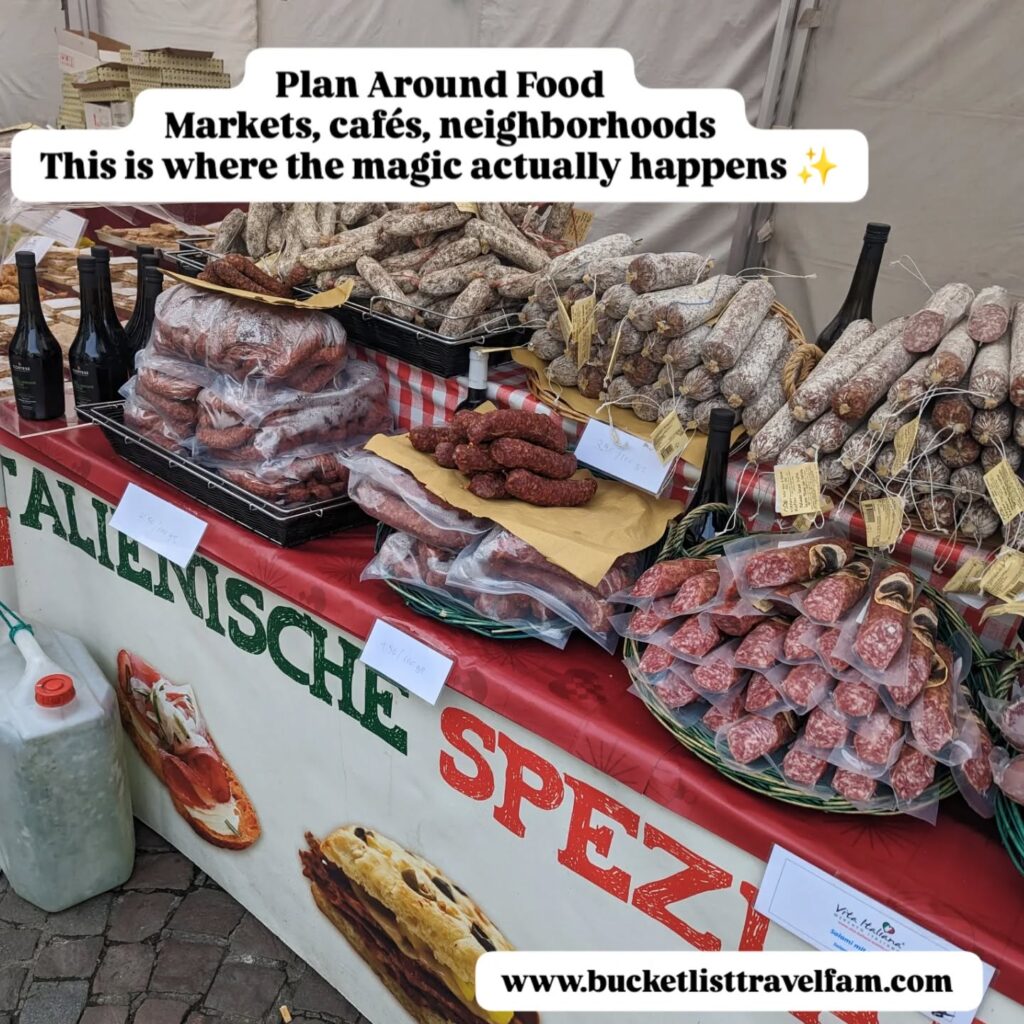
Build the Trip Around Food, Markets & Neighborhoods
Europe is best experienced through everyday life.
Instead of focusing only on major landmarks, prioritize:
• Local food markets
• Neighborhood bakeries
• Casual restaurants
• Evening walks through old towns
These experiences cost less, feel more authentic, and slow the trip down naturally.
Europe Doesn’t Need to Be Perfect to Be Incredible
Your first Europe trip doesn’t need to be flawless.
You don’t need to “do it right.”
You just need to go.
Some days will be busy. Some plans will change. Some places will surprise you. That’s part of what makes Europe unforgettable.
Confidence comes after you start planning — not before.
A Simple Way to Start Planning
If Europe feels overwhelming, start with just these steps:
-
Pick one region
-
Choose 2–3 base cities
-
Check train connections
-
Find walkable accommodations
-
Leave space for wandering
That’s it. You don’t need more than that to begin.
Final Thoughts
Europe isn’t reserved for expert travelers or people with unlimited time and money. It’s for curious travelers willing to slow down, explore intentionally, and trust that the experience will come together.
If Europe has been sitting on your bucket list for years, this is your sign that it’s more doable than you think.